Molecular neuroscientist Mechanism discovery & target validation · Method development

E. Nicholas Petersen

Mechanism discovery & target validation. Method development.

I am a molecular neuroscientist studying mechanosensation and circadian biology. Across five first-author papers, I have traced observed phenotypes to their molecular mechanisms.

Target validationAssay developmentQuantitative microscopyProtein biochemistryScientific software

I build assays, instruments, and software when standard methods cannot resolve a biological question. My work includes four assays and instruments and two software tools used alongside microscopy, molecular biology, and biochemistry.

10Publications
5First-author
papers
6Invented assays,
instruments & software
1Patent application
drafted

Core capabilities

How I work.

End-to-end mechanism discovery

I design and use techniques at every level between a predicted structure and a measured phenotype: computational prediction, structure-guided mutagenesis, recombinant protein production, quantitative imaging, transgenic animal work, and animal behavior. This has been applied across both postdoctoral and graduate work to elucidate novel mechanisms of circadian biochemistry and mechanotransduction.
Analysis and training software

I co-developed ClockWork in the Rosbash lab and am developing a microscopy training tool to simplify training and improve the data collected by the next generation of microscopists.

Selected scientific work

Research and methods.

View all publications
Scientific figure from the project
01

bioRxiv · 2025 · Preprint

The dramatic impact of the PER–DBT interaction on circadian timekeeping and temperature compensation

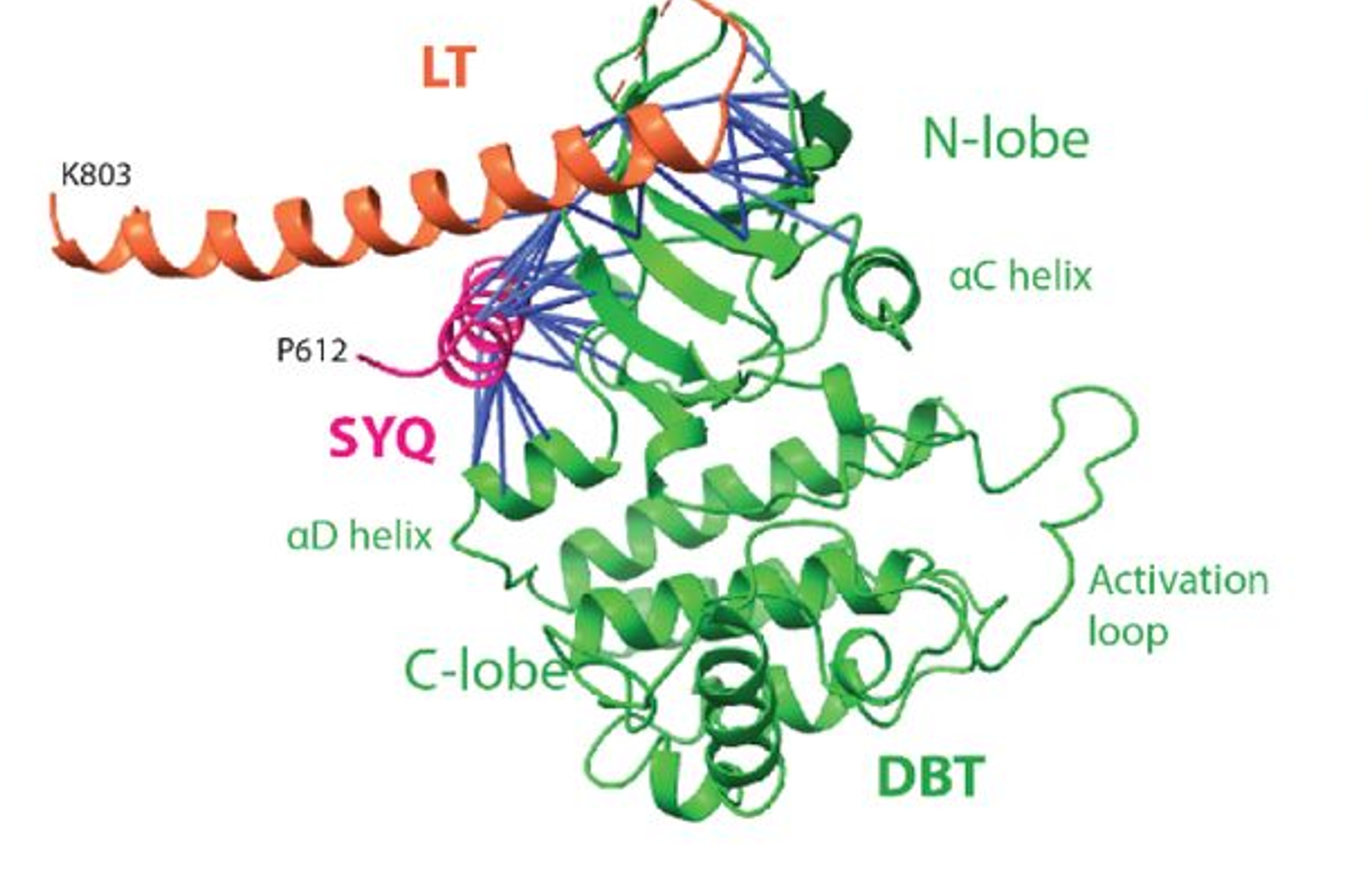
The circadian clock relies on phosphorylation-dependent timers to dictate period length and ensure temperature compensation. Using AlphaFold2-multimer, we predicted the interaction interface between PERIOD (PER) and DOUBLETIME (DBT/CK1). Structure-guided point mutations designed at this interface produced Drosophila circadian periods exceeding 48 hours and revealed a mechanism of temperature compensation driven by PER-DBT interface dynamics.

Read the case study
Scientific figure from the project
02

eLife · 2023

Mechanical activation of TWIK-related potassium channel by nanoscopic movement and rapid second messenger signaling

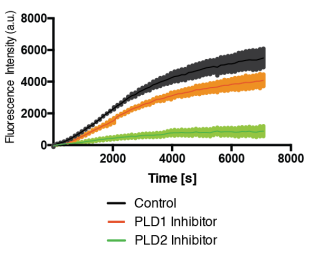
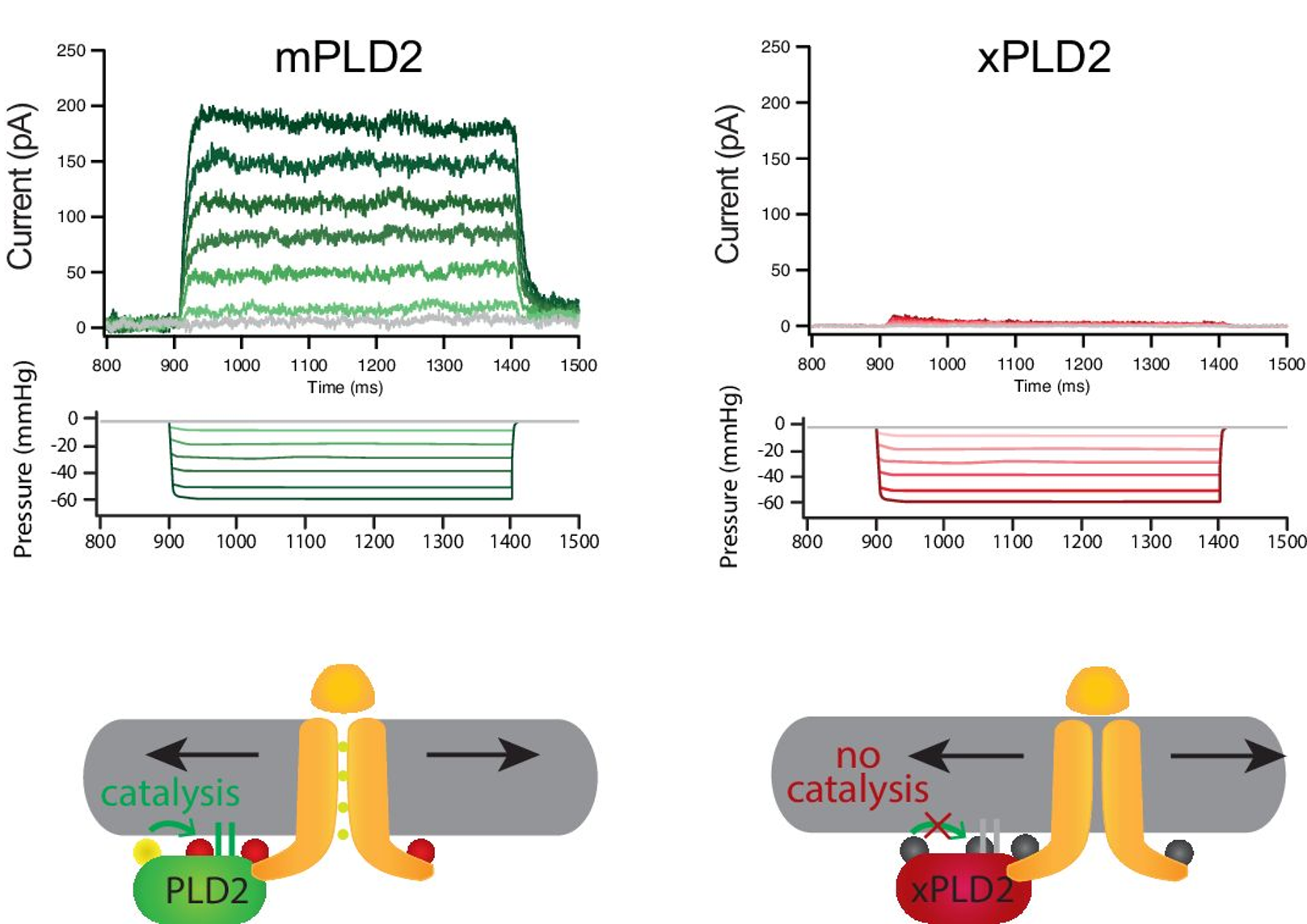
Mechanosensory ion channels like TREK-1 respond to physical force, but the molecular events upstream of gating remain debated. Mechanical shear stress moves phospholipase D (PLD2) into ordered lipid domains (GM1 rafts), where it produces localized phosphatidic acid (PA) that gates TREK-1 channels. Super-resolution dSTORM in intact Drosophila brains and temperature-clamped shear fixation showed that this raft-mediated pathway controls behavioral mechanosensation in vivo.

Read the case study
Scientific figure from the project
03

Assays, instruments, and software

Purpose-built research tools

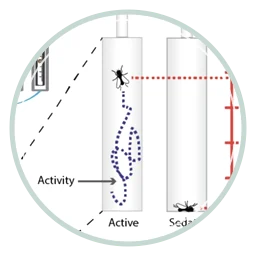
I developed or co-developed four assays and instruments and two software tools for questions that existing methods could not answer.

Read the case study

Research experience

Career timeline.

2020 — Present

Postdoctoral Associate — Rosbash Laboratory

Howard Hughes Medical Institute / Brandeis University, Waltham, MA

Identified the PER–DBT protein interaction as a determinant of circadian period and temperature compensation, producing the longest-period circadian mutants on record and a previously undescribed compensation mechanism. Built a structure-to-phenotype discovery workflow spanning AlphaFold2 prediction, structure-guided mutant design, recombinant protein biochemistry, transgenic animals, and quantitative behavioral/molecular readout. I am developing an in silico discovery pipeline with AlphaPulldown. Co-developed ClockWork, an open-source circadian analysis package.

2012 — 2019

Graduate Student, then Postdoctoral Fellow — Hansen Laboratory

The Scripps Research Institute, Jupiter, FL

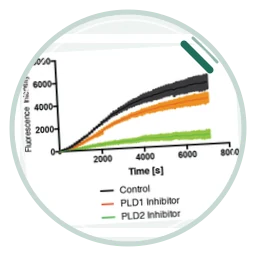
Established disruption of ordered lipid nanodomains as a mechanism of mechanical and anesthetic activation of TREK-1 potassium channels. First author on three publications, co-author on three more. Developed a live-cell, real-time enzyme-coupled PLD activity assay used across four publications, and applied 3D single-molecule super-resolution imaging across live cells, fixed cells, mouse brain slices, and whole Drosophila brain.

2010 — 2012

Research Assistant — Buskirk Laboratory

Brigham Young University, Provo, UT

Contributed genetic selection and radiolabeled pulse-chase experiments to the identification of nascent peptide motifs that stall translation in bacteria.

Education

PhD, Chemical & Biological Sciences

The Scripps Research Institute · 2019

BS, Biochemistry

Brigham Young University · 2012

Talks & presentations

  • Invited talk, Society for Research on Biological Rhythms
  • Invited talk, Brandeis Postdoctoral Symposium, Waltham
  • Invited talk, Society for Neuroscience, San Diego
  • Invited talk, Department of Pathology, Brigham and Women's Hospital, Boston
  • Keystone Conference, Mammalian Sensory Systems, Seattle
  • GRC, Ligand Recognition and Molecular Gating, Ventura
  • Biophysical Society Annual Meeting, New Orleans

Awards & funding

  • NIH T32 Neurobiology Training Grant
  • Best poster, FEBS Advanced Course on Lipid–Protein Interactions, Greece
  • Scheller Graduate Fellowship, RJ Foundation
  • Best presentation, Scripps Graduate Program Retreat
  • Richard & Helen DeVos Graduate Fellowship, Scripps
  • ORCA Research Grant, Brigham Young University
  • Mentored Research Award, Brigham Young University — awarded three times